
The Workmen's Compensation Fund (WCF) in Thailand
About TMA Group
TMA Group is a professional company focusing on local recruitment and corporate consulting in Thailand, dedicated to providing one-stop services including recruitment, financial management, tax disposal, legal consulting, personnel management, etc. for enterprises and individuals. If you need more advice on investment in Thailand, please feel free to contact us.
In Thailand, in addition to making mandatory Social Security contributions for employees, employers are also required to contribute to the Workmen’s Compensation Fund (กองทุนเงินทดแทน).
For employers, payment into the Workmen’s Compensation Fund is a statutory obligation that cannot be ignored.
1. What is the Workmen’s Compensation Fund?
The Workmen’s Compensation Fund is a dedicated fund under which compensation is paid by the fund on behalf of the employer when an employee suffers an incident arising from work, including:
Work-related accidents or injuries
Occupational illnesses
Disability
Death or disappearance
Loss of bodily organs or loss of working capacity
2. Which employers are required to contribute?
Any employer who hires one (1) or more employees is required to:
Complete employer and employee registration within 30 days from the date of hiring; and
Make contributions to the Workmen’s Compensation Fund in accordance with the law.
3. How are contributions made (เงินสมทบ)?
Contributions are paid solely by the employer
Paid on an annual basis
The contribution rate is approximately 0.2%–1% of the employee’s total annual wages
The exact rate is determined by industry risk classification, generally within the range of 0.2%–1.0%
Common reference ranges (final determination subject to the Ministry of Labour / Social Security Office):
🏢 Office, consulting, trading businesses: approx. 0.2%–0.5%
🏭 Manufacturing and factories: approx. 0.5%–0.8%
🏗️ Construction, logistics, high-risk industries: up to 1.0%
Note: The contribution rate is not selected by the company. It is assessed and determined by the competent authority based on industry type and historical risk exposure.
4. Key question: If Social Security already covers work-related injuries, why is the Workmen’s Compensation Fund still required?
The core distinction lies in: who pays first, what is covered, and at which stage the protection applies.
Workmen’s Compensation Fund (กองทุนเงินทดแทน)
Primary Protection
Key features:
Applies as long as the injury or illness is work-related
Irrelevant whether the employee has resigned or continues contributing to social security
Used directly and immediately for the work injury itself
Main coverage:
Medical expenses for work injuries / occupational diseases
Income compensation during work stoppage
Disability and death compensation
👉 Once a work injury occurs, this fund is the first line of compensation.
Social Security Fund (SSO)
Secondary / Long-term Protection
Key features:
A comprehensive social welfare system
Coverage requires the employee to remain within the social security system
Focuses on long-term and livelihood protection
Relevant coverage includes:
Long-term medical care
Benefits following loss of working capacity
It is not specifically designed to address the immediate consequences of a work-related accident.


TMA Consulting Management has been paying attention to the updating of information through newsletters for many years, but we do not assume any responsibility for the completeness, correctness or quality of the information provided. No information contained in this article can replace the personal consultation provided by a qualified lawyer. Therefore, we do not assume any liability for damages caused by the use or non-use of any information in this article (including any kind of incomplete or incorrect information that may exist), unless it is caused intentionally or by gross negligence.
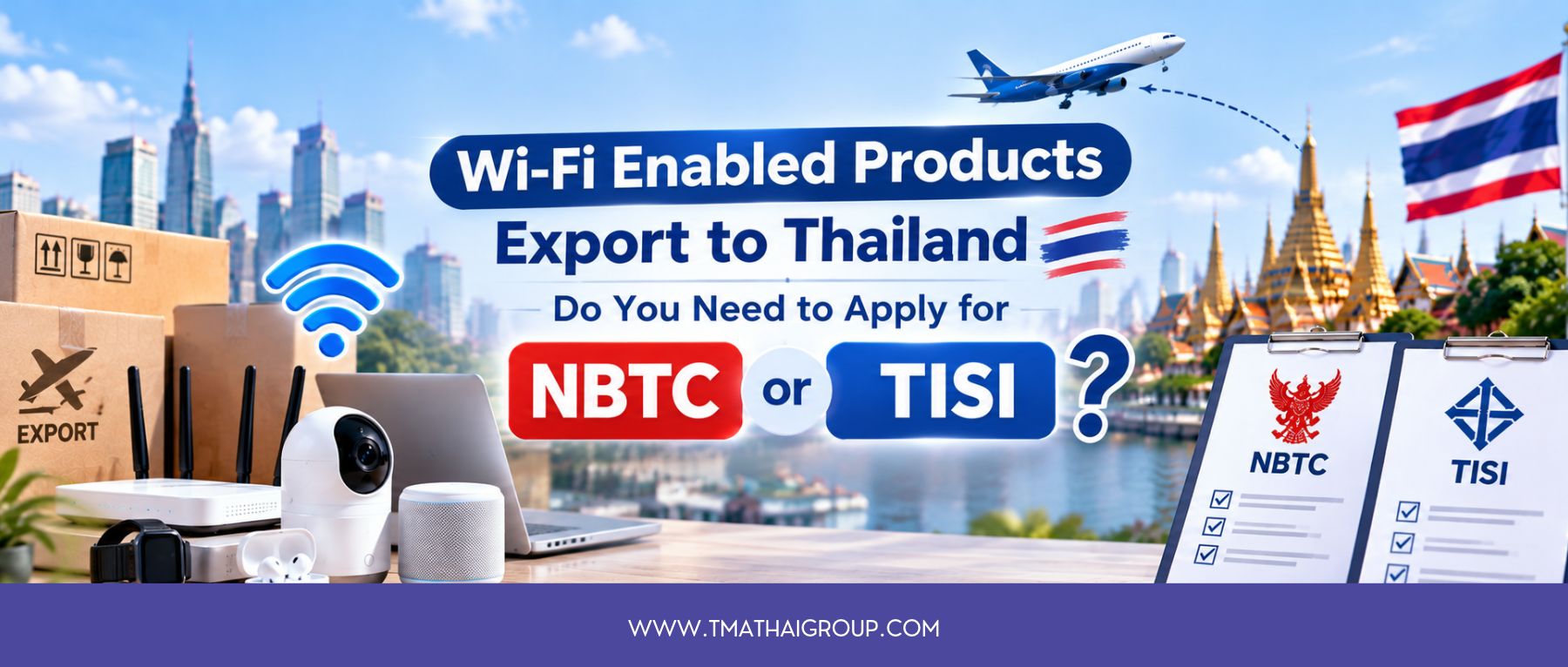
Does a Wi-Fi-Enabled Product Exported to Thailand Require NBTC or TISI Approval?
Thailand Personal Income Tax Deduction Guide
What Are PND.50 and PND.51? A Guide to Thailand's Corporate Income Tax Returns
What Is Thailand FDA (อย.)? Which Products Require Approval?
Thailand Trademark Registration Costs Explained
What Is DLD?

What Is NBTC Certification? Which Products Must Obtain NBTC Approval Before Entering Thailand?
Thailand Machinery Registration