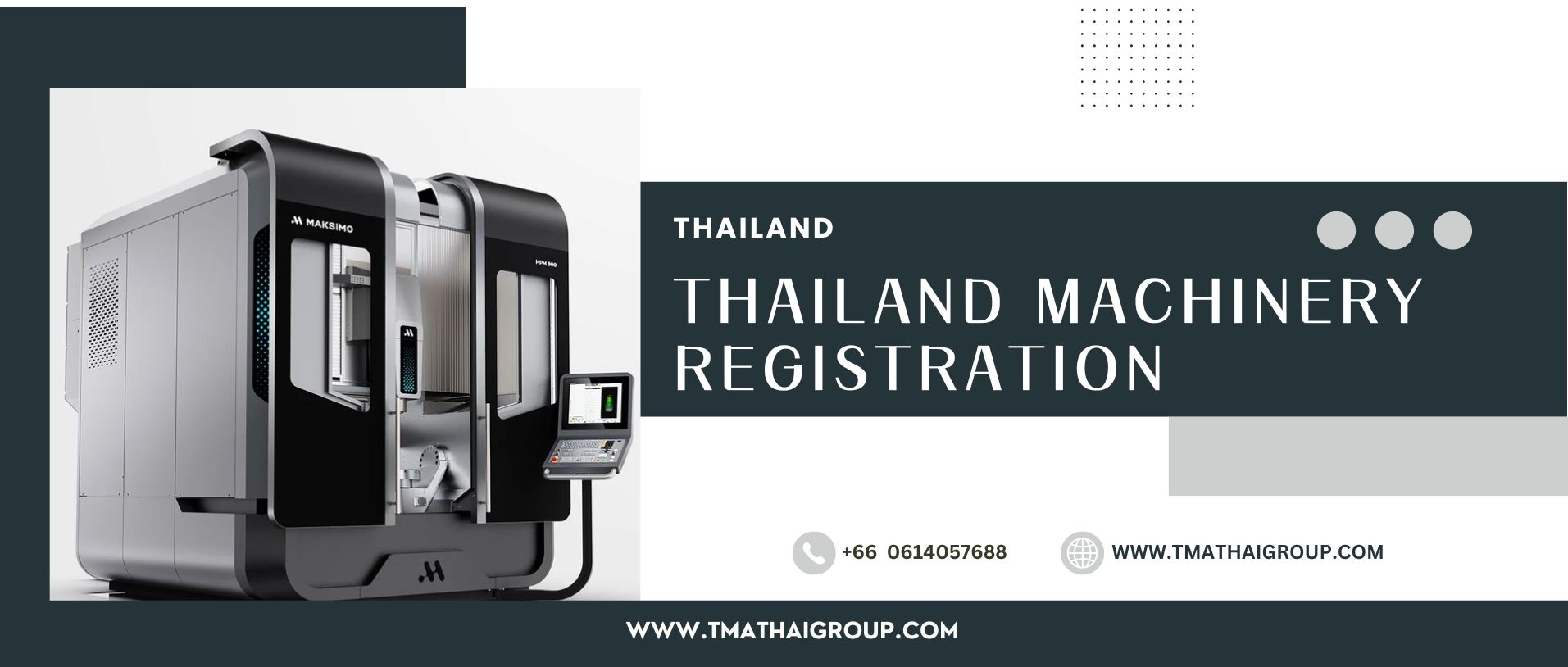
Thailand Machinery Registration
Emory
Views: 1017
2026-06-05 15:30:31
Comments: 0
About TMA Group
TMA Group is a professional company focusing on local recruitment and corporate consulting in Thailand, dedicated to providing one-stop services including recruitment, financial management, tax disposal, legal consulting, personnel management, etc. for enterprises and individuals. If you need more advice on investment in Thailand, please feel free to contact us.
“Thailand Machinery and Equipment Registration: More Than Compliance — It Also Impacts Corporate Asset Value”
For industrial businesses, machinery and equipment are not only essential to production and operations, but also represent a significant part of a company’s asset value.
In Thailand, registering machinery and equipment is a very important step in business operations. Once registration is completed, the machinery can not only support lawful business activities, but may also be used as collateral for financing purposes.
However, many companies still rely on outdated understandings of the relevant regulations.
In fact, Thailand’s laws governing machinery registration were amended in 2019, with adjustments made to certain procedures and requirements.
What Laws Govern Machinery and Equipment Registration in Thailand?Machinery and equipment registration in Thailand is primarily governed by:
👉 The Factory Act B.E. 2535 (1992)
And its subsequent amendments:
The Second Amendment B.E. 2562 (2019)
The Third Amendment B.E. 2562 (2019)
The responsible authority is:
👉 The Department of Industrial Works (DIW), Ministry of Industry, Thailand
Key changes introduced by the amendments include:
✔ Simplification of certain procedures
✔ Revision of the definition of a “factory”
As a result, compliance and registration procedures have become more convenient for some businesses compared to the previous framework.
What Is Machinery Registration?Machinery registration is the process of registering machinery and equipment used in industrial operations with the relevant Thai authorities. Once registered, the machinery becomes an officially recognized asset and may be used for various legal and business purposes, including financing, asset management, and regulatory compliance.
Machinery Registration Process
Step 1: Review machinery eligibility
Confirm whether the machinery meets the registration requirements under applicable regulations.
Step 2: Prepare supporting documents
Collect the required documents, such as company registration documents, machinery details, purchase records, invoices, and related technical information.
Step 3: Submit the application
File the registration application with the Department of Industrial Works (DIW) or the relevant authority.
Step 4: Verification and inspection
The authorities may review the submitted documents and conduct an inspection of the machinery, if required.
Step 5: Registration approval and issuance of certificate
Upon approval, the machinery will be officially registered and the registration certificate will be issued.
Step 6: Update future changes (if applicable)
Any transfer, relocation, modification, or disposal of registered machinery should be reported and updated in accordance with regulatory requirements.
Which Businesses Should Register Machinery and Equipment?This generally includes:
• Industrial factories
• Companies that use machinery and equipment for production activities
• Businesses that wish to use machinery and equipment as collateral assets
Even if certain businesses:
👉 No longer require a factory license
It is still:
👉 Recommended to complete machinery registration
Because it can provide benefits for both business operations and asset management.
What Should Companies Pay Attention To?
• Machinery information must accurately match the actual equipment in use
• Registration records should be updated if machinery is relocated or sold
• Incomplete documentation may lead to delays in the registration process
• Companies must continue to comply with relevant regulations, ministerial notifications, and supplementary requirements
Properly registered machinery is not only a matter of legal compliance.
It can also:
💰 Enhance corporate asset value
💼 Strengthen a company's ability to work with financial institutions
At present, Thailand's machinery registration system continues to operate under the existing legal framework, but significant amendments introduced in 2019 have simplified certain procedures and improved convenience for businesses.
Therefore, business owners should understand:
• The primary legal framework
• The latest amendments
• Related implementing regulations and requirements
This helps ensure that the business operates in a compliant, secure, and sustainable manner over the long term.
Disclaimer
TMA Consulting Management has been paying attention to the updating of information through newsletters for many years, but we do not assume any responsibility for the completeness, correctness or quality of the information provided. No information contained in this article can replace the personal consultation provided by a qualified lawyer. Therefore, we do not assume any liability for damages caused by the use or non-use of any information in this article (including any kind of incomplete or incorrect information that may exist), unless it is caused intentionally or by gross negligence.