
What Is NBTC Certification? Which Products Must Obtain NBTC Approval Before Entering Thailand?
About TMA Group
TMA Group is a professional company focusing on local recruitment and corporate consulting in Thailand, dedicated to providing one-stop services including recruitment, financial management, tax disposal, legal consulting, personnel management, etc. for enterprises and individuals. If you need more advice on investment in Thailand, please feel free to contact us.
—— TMA GROUP ——
一
站
式
服
务
What Is NBTC Certification?
As Chinese companies continue to expand into the Thai market, an increasing number of electronic products, smart devices, and telecommunications equipment are being introduced into Thailand for sale. However, before exporting their products, many businesses focus primarily on certifications such as FDA and TISI, while overlooking another critical market-entry requirement — NBTC certification.
In fact, if a product involves wireless communication, radio frequency transmission, or receiving functions, it may be required to obtain NBTC certification before entering the Thai market.
Without the required certification, products may not be able to clear customs successfully and could even face detention, re-export, or administrative penalties.
So, what exactly is NBTC? Which products require certification? And how can businesses obtain it?
NBTC (National Broadcasting and Telecommunications Commission) is Thailand’s National Broadcasting and Telecommunications Commission.
Its primary responsibility is to regulate radio frequencies, broadcasting services, and telecommunications equipment in Thailand, ensuring that electronic communication products comply with Thai technical standards and do not interfere with local communication networks.
In simple terms:
If a product involves wireless signal transmission or reception, companies should first determine whether it falls within the scope of NBTC regulation.
Only after obtaining NBTC certification can the product be legally imported, sold, and used in Thailand.
Generally, the following products may be subject to NBTC certification requirements:
Mobile Phones and Communication Devices
• 4G smartphones
• 5G smartphones
• Satellite phones
• Tablets with SIM card functionality
Wi-Fi and Networking Devices
• Routers
• Access Points
• Mesh devices
• Wi-Fi modules
Bluetooth Devices
• Bluetooth earphones
• Bluetooth speakers
• Bluetooth keyboards and mice
• Bluetooth remote controls
Wearable Devices
• Smart watches
• Smart bands
• GPS trackers
Smart Home Devices
• Smart door locks
• Smart cameras
• Smart switches
• Smart plugs
IoT Devices
• NB-IoT devices
• LTE modules
• 5G communication modules
• RFID devices
Other Wireless Communication Devices
• Walkie-talkies
• Wireless monitoring systems
• Wireless alarm systems
• Wireless television receiving devices
The assessment criteria are actually quite simple:
If a product uses technologies such as Wi-Fi, Bluetooth, LTE, 5G, RFID, or NFC, it will generally require NBTC compliance assessment.
Depending on the product category, NBTC certification is generally divided into three types:
1. SDoC Certification
Supplier's Declaration of Conformity
Applicable to:
• Wi-Fi devices
• Bluetooth devices
• IoT devices
• Short-range wireless devices
Features:
• Relatively simple process
• Faster approval timeline
• Lower cost
2. Class A Registration
Applicable to certain specialized wireless devices, such as:
• RFID devices
• DECT telephones
• Special frequency devices
• Certain industrial communication equipment
Features:
• Requires more detailed technical documentation
• Stricter frequency parameter requirements
3. Class B Certification
This is the full certification process.
Applicable to:
• Smartphones
• Tablets
• LTE modules
• 5G communication devices
• Carrier-grade telecommunications equipment
Features:
• Most stringent technical review
• Largest number of testing requirements
• Longer approval timeline
Companies are generally required to prepare:
Technical Documents
• Product specification sheet (Specification)
• Datasheet
• User manual
• Product photographs
• Circuit diagrams (for certain products)
Test Reports
• RF test reports
• EMC test reports
• Safety test reports
Corporate Documents
• Company registration certificate
• Power of Attorney (POA)
• Declaration of Conformity (DoC)
• Information of the Thai local authorized representative
Step 1: Identify the Product Category
Determine the wireless communication technology used by the product.
Step 2: Determine the Certification Type
Confirm whether the product falls under SDoC, Class A, or Class B.
Step 3: Prepare Test Reports
Organize test reports and technical documentation.
Step 4: Submit the Application
Submit the certification application to NBTC.
Step 5: Technical Review
NBTC reviews the product’s technical specifications and test results.
Step 6: Obtain the Certification Certificate
Receive the NBTC certification number.
Step 7: Import and Sell the Product
After proper labeling requirements are completed, the product can be legally imported and sold in Thailand.

总结
As Thailand’s digital economy and smart device market continue to grow rapidly, NBTC certification has become a key market-entry requirement for wireless communication products entering Thailand.For companies planning to export smartphones, Bluetooth devices, Wi-Fi equipment, smart home products, and IoT devices, it is important to confirm the applicable regulatory requirements and complete NBTC certification in advance. This not only helps avoid customs clearance risks, but also enables products to enter the Thai market more efficiently and operate in full compliance.
END


TMA Consulting Management has been paying attention to the updating of information through newsletters for many years, but we do not assume any responsibility for the completeness, correctness or quality of the information provided. No information contained in this article can replace the personal consultation provided by a qualified lawyer. Therefore, we do not assume any liability for damages caused by the use or non-use of any information in this article (including any kind of incomplete or incorrect information that may exist), unless it is caused intentionally or by gross negligence.
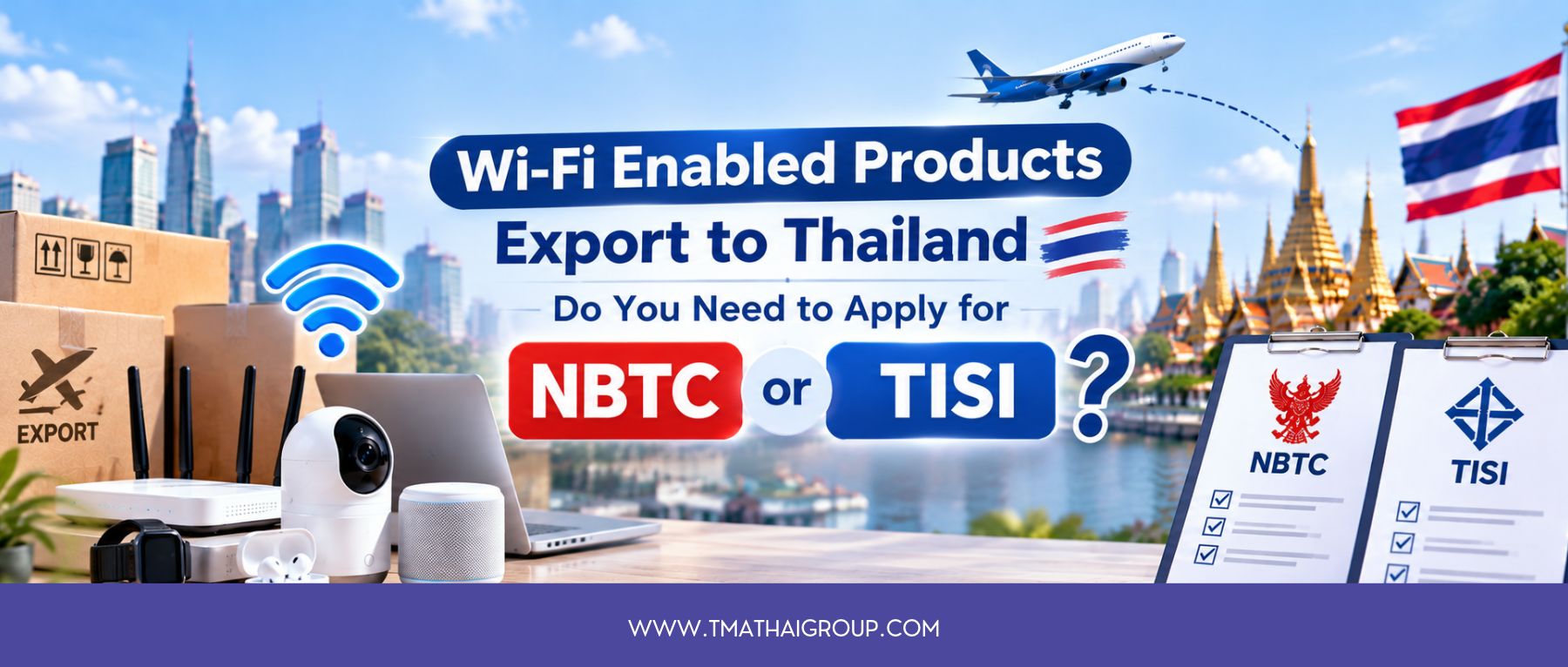
Does a Wi-Fi-Enabled Product Exported to Thailand Require NBTC or TISI Approval?

Thailand Personal Income Tax Deduction Guide
What Are PND.50 and PND.51? A Guide to Thailand's Corporate Income Tax Returns
What Is Thailand FDA (อย.)? Which Products Require Approval?

Thailand Trademark Registration Costs Explained

What Is DLD?
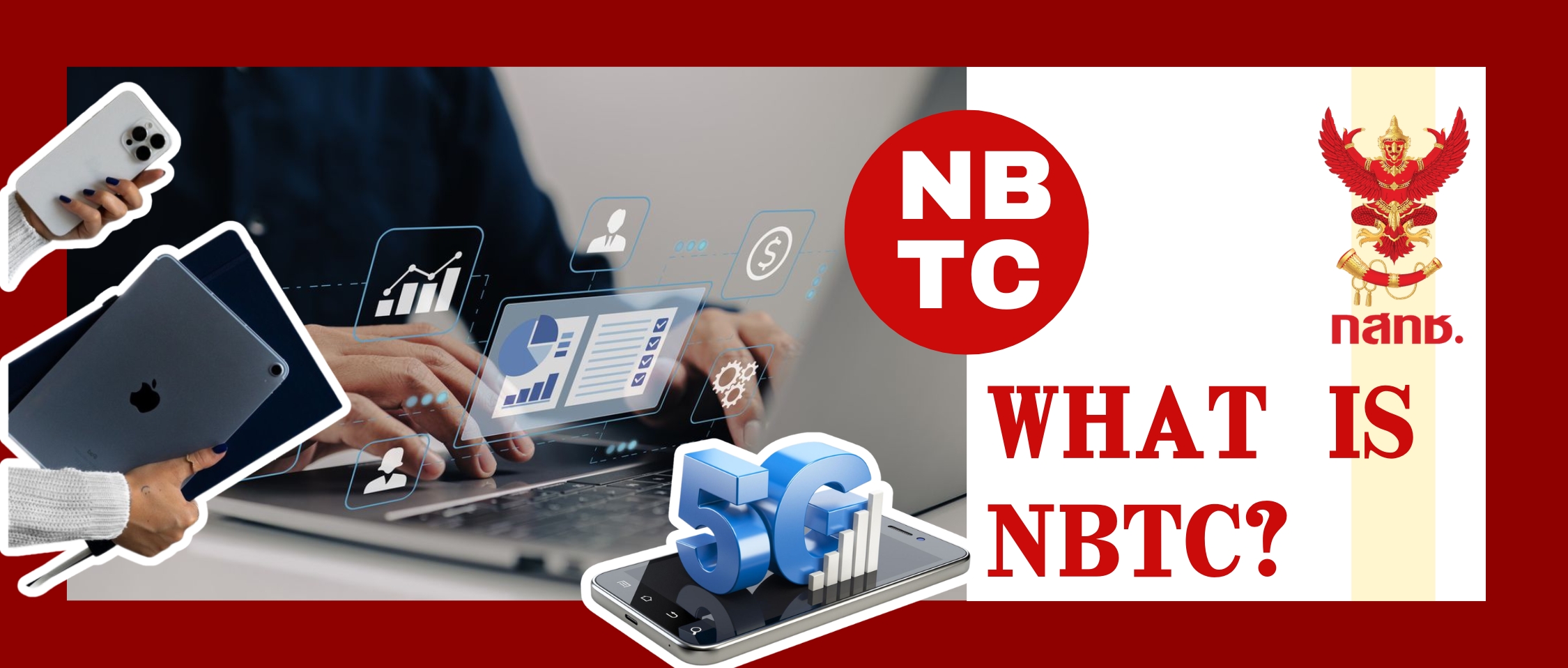
What Is NBTC Certification? Which Products Must Obtain NBTC Approval Before Entering Thailand?
Thailand Machinery Registration