Can You Stay in Thailand After Your Work Permit or Work Visa Is Cancelled?
Emory
Views: 906
2026-07-09 17:12:41
Comments: 0
About TMA Group
TMA Group is a professional company focusing on local recruitment and corporate consulting in Thailand, dedicated to providing one-stop services including recruitment, financial management, tax disposal, legal consulting, personnel management, etc. for enterprises and individuals. If you need more advice on investment in Thailand, please feel free to contact us.
Can You Stay in Thailand After Your Work Permit or Work Visa Is Cancelled?
Many foreign employees working in Thailand have the same question:
If my company cancels my Work Permit or work visa, can I continue staying in Thailand?
For example, your passport shows that you are permitted to stay until December, but your employer cancels your Work Permit in October. Does that mean you can legally remain in Thailand until December?
The answer is: It is not that simple.
In Thailand, a Work Permit, a Non-B Visa, and an Extension of Stay are closely related, but they are three different legal concepts with different purposes and validity. Understanding the distinction between them is essential to avoiding overstaying or violating Thai immigration regulations.
Can You Stay in Thailand After Your Work Permit Is Cancelled?First, it is important to understand one key point:
Once a Work Permit is cancelled, a foreign national is no longer allowed to work in Thailand. However, whether they can continue staying in the country depends on the validity of their visa or permission to stay.
A Work Permit is the primary legal document that authorizes a foreign national to work in Thailand. When an employment relationship ends—whether due to resignation, termination, or the expiration of an employment contract—the employer is required to cancel the employee's Work Permit.
According to the Thai government's public service guidelines, employers must apply to cancel the Work Permit within 15 days after the foreign employee stops working. Failure to do so may result in a fine of up to THB 20,000.
Therefore, if only the Work Permit has been cancelled, but the employee's visa or permission to stay has not yet been revoked by the Immigration Bureau, it does not automatically mean that the employee is staying in Thailand illegally.
In other words, the cancellation of a Work Permit does not automatically invalidate the stay permission shown in the passport. Whether a foreign national may continue to remain in Thailand depends on their current visa status or immigration permission to stay.
If only the Work Permit has been cancelled, the individual must stop working immediately. However, whether they may continue staying in Thailand depends on whether their visa or permission to stay remains valid.
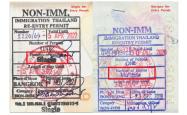
How Is a Work Visa Cancelled? Can You Still Stay in Thailand Afterwards?If your passport contains a stamp stating "Extension of Stay Permitted Until...", you should pay special attention.
This usually means that you are staying in Thailand under a Non-B Extension of Stay, rather than the original period of stay granted upon entry with a Non-B Visa.
A work-based Non-B Extension of Stay is not a job-seeking visa, nor is it a visa for staying in Thailand for leisure or residence.
If you resign, are dismissed, or your company's Work Permit is cancelled, the original reason for your permission to stay has changed.
Therefore, you should not simply assume:
"The expiry date in my passport hasn't arrived yet, so I can stay until that date."
For example:
"My Non-B Extension of Stay is valid until December, but my company cancelled my Work Permit in August. I am not working anymore and only want to stay in Thailand to rest, live here, or look for a new job. Can I continue staying?"
If your passport contains the stamp:
Extension of Stay Permitted Until
it usually indicates that you are staying under a Non-B Extension of Stay, rather than the original Non-B entry permission. A work-based Non-B Extension of Stay is not a job-seeking visa, nor is it intended for staying in Thailand for leisure or residence.
If you have already left your job or your former company's Work Permit has been cancelled, the original reason for your permission to stay has changed.
Therefore, it is not recommended to continue staying in Thailand under the employment-based Extension of Stay sponsored by your former employer until its original expiry date without taking any further action.
This may affect future applications for:
Recommendation
If you plan to change jobs, after your Work Permit has been cancelled, you should visit the Immigration Bureau as soon as possible to cancel your current permission to stay and submit a new work visa application through your new employer.
If you do not intend to continue working in Thailand, and you do not have a valid Re-Entry Permit, you may leave Thailand directly. To be more prudent, it is recommended to cancel your existing Non-B Extension of Stay at the Immigration Bureau before departing Thailand.
How Should Your Visa Be Handled When Changing to a New Employer in Thailand?
In general, before cancelling the Work Permit and Extension of Stay with the current employer, you should first confirm whether the new employer is eligible to sponsor the foreign employee and whether all required documents are ready, so that the new Work Permit and Extension of Stay can be applied for in time.
If the old company completes the cancellation first and the employee takes too long to join the new company, the following issues may arise:
Interruption of visa status;
Failure to renew the visa in time;
The employee may need to leave Thailand and apply for a new visa;
Risk of overstaying.
Therefore, if both companies are willing to cooperate, a better approach is to coordinate in advance the employee's last working day, the Work Permit cancellation date, the Immigration appointment date, and the timing for the new company's application.
Recommended Process
Confirm that the new company is qualified to apply for a Work Permit and Non-B Extension of Stay for the foreign employee.
The new company prepares all required application documents.
The current employer cancels the existing Work Permit and issues the employee's resignation certificate and other required cancellation documents.
The employee brings the documents from the former employer, together with the new company's documents or new Work Permit application, to the Immigration Bureau to apply for a Non-B Extension of Stay.
The new company applies for the new visa and Work Permit.
If the Immigration Bureau allows the transfer to continue within Thailand, the new Work Permit and Non-B Extension of Stay can be processed according to the requirements of the Immigration Bureau and the Department of Employment.
If the Immigration Bureau does not allow the transfer within Thailand, the employee may need to leave the country, and the new company must prepare the documents again and submit a new Non-B Visa application before re-entering Thailand.
The employee obtains a new Non-B Extension of Stay sponsored by the new employer.
TMA Recommendation
For foreign employees working in Thailand, a Work Permit and a Non-B Extension of Stay are not the same thing.
Once a company cancels a Work Permit, the employee is no longer permitted to work. However, the company cannot directly cancel the immigration stamp in the employee's passport. If the employee holds a Non-B Extension of Stay that was granted based on the former employer's sponsorship, the original basis for that permission to stay has changed after the employment ends. Whether the Extension of Stay needs to be cancelled, changed, or transferred to a new employer should be handled in accordance with the requirements of the Thai Immigration Bureau.
If the employee will no longer be working in Thailand, they should arrange to leave the country as soon as possible or consult the Immigration Bureau to determine whether any action is required regarding their existing employment-based Extension of Stay.
TMA can assist companies and foreign employees with Work Permit applications, Non-B Visas, Non-B Extensions of Stay, and procedures related to changing employers.
For advice on the most appropriate application process for your situation, feel free to contact TMA for consultation.