
Thailand Businesses: Starting in 2026, Failing to Make This Payment Could Be Illegal!
About TMA Group
TMA Group is a professional company focusing on local recruitment and corporate consulting in Thailand, dedicated to providing one-stop services including recruitment, financial management, tax disposal, legal consulting, personnel management, etc. for enterprises and individuals. If you need more advice on investment in Thailand, please feel free to contact us.
TMA GROUP
Thailand Employee Welfare Fund Update
What Should Businesses Prepare for Before 1 October 2026?
The Thailand Employee Welfare Fund (Thai: กองทุนสงเคราะห์ลูกจ้าง) is an employee protection scheme established under Thailand's Labour Protection Act.
According to the latest Royal Gazette announcement, the official implementation date for mandatory contributions to the Employee Welfare Fund has been postponed to 1 October 2026.
This policy will directly affect businesses in Thailand that employ 10 or more employees and have not established a qualified employee welfare arrangement.
The Thailand Employee Welfare Fund (Thai: กองทุนสงเคราะห์ลูกจ้าง) can be understood as an Employee Welfare Fund or Employee Relief Fund.
The primary purpose of this fund is to provide financial protection for employees in the event of resignation, death, or when an employer is unable to pay wages, severance pay, or other payments required under labour law. According to Thailand's Ministry of Labour, the fund is intended to assist employees affected by an employer's failure to pay severance, wages, or other amounts payable under the Labour Protection Act.
It is important to note that the Employee Welfare Fund is not the same as Thailand's Social Security Fund, nor is it equivalent to a voluntary Provident Fund (กองทุนสำรองเลี้ยงชีพ) established by an employer.
Instead, the Employee Welfare Fund is an employee protection scheme established under Thailand's Labour Protection Act.
Legal Basis
The key regulation businesses should pay attention to is:
Royal Decree Prescribing the Commencement Date for the Collection of Employee Savings and Employer Contributions to the Employee Welfare Fund, B.E. 2568 (2025)
(Thai: พระราชกฤษฎีกา กำหนดระยะเวลาเริ่มดำเนินการจัดเก็บเงินสะสมและเงินสมทบกองทุนสงเคราะห์ลูกจ้าง พ.ศ. 2568)
This Royal Decree was published in the Royal Gazette in 2025. It stipulates that, effective 1 October 2026, eligible businesses must begin fulfilling their obligations to declare, withhold, and remit contributions to the Employee Welfare Fund.
The key amendment introduced by the Decree is the postponement of the commencement date for collecting both employee savings (เงินสะสม) and employer contributions (เงินสมทบ) from the originally scheduled 1 October 2025 to 1 October 2026.
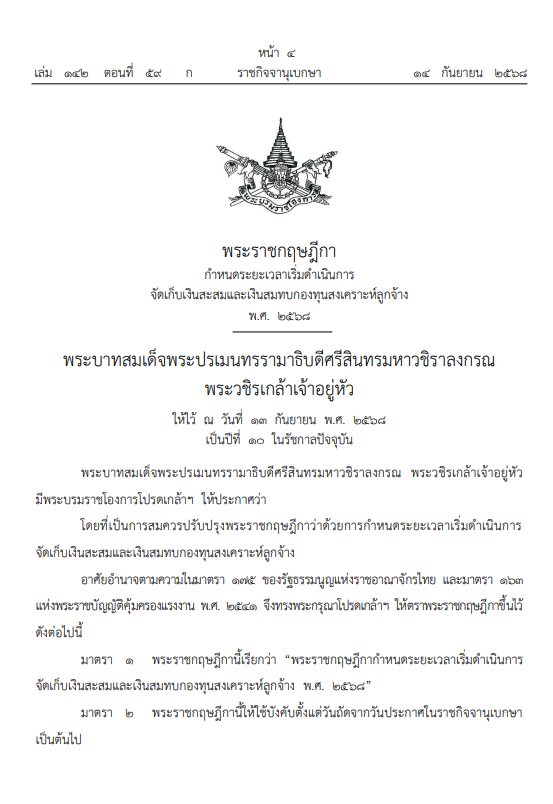
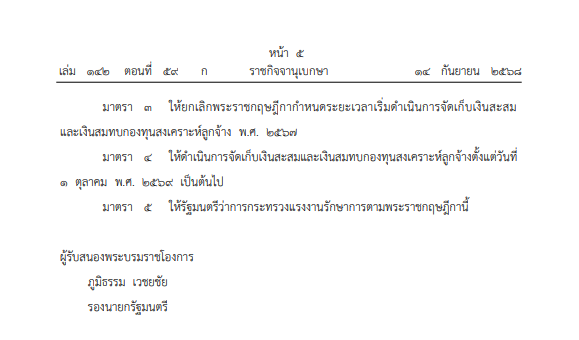
The Thailand Employee Welfare Fund (กองทุนสงเคราะห์ลูกจ้าง) is an important employee protection scheme established under Thailand's Labour Protection Act. According to the latest Royal Gazette announcement, the mandatory contribution date has been postponed to 1 October 2026. The requirement generally applies to businesses with 10 or more employees that have not established a qualified Provident Fund or other legally compliant employee welfare arrangement.
During the initial implementation period, both employees and employers are required to contribute 0.25% of the employee's wages. Beginning on 1 October 2031, the contribution rate for both parties will increase to 0.50%.
Before the regulation takes effect, businesses should review their workforce size, existing employee welfare arrangements, payroll systems, and declaration procedures to ensure full compliance with the new requirements.

TMA Recommendation:When operating a business in Thailand, companies should pay attention not only to company registration, visas and work permits, and tax compliance, but also to ongoing changes in labour laws and employee welfare regulations.
The implementation of the Employee Welfare Fund will have a direct impact on payroll calculations, HR administration, and labour compliance. Businesses are therefore advised to conduct an internal compliance review in advance, including an assessment of their workforce size, employee welfare arrangements, payroll systems, and reporting procedures, to avoid last-minute adjustments before the regulation takes effect.


END

TMA Consulting Management has been paying attention to the updating of information through newsletters for many years, but we do not assume any responsibility for the completeness, correctness or quality of the information provided. No information contained in this article can replace the personal consultation provided by a qualified lawyer. Therefore, we do not assume any liability for damages caused by the use or non-use of any information in this article (including any kind of incomplete or incorrect information that may exist), unless it is caused intentionally or by gross negligence.
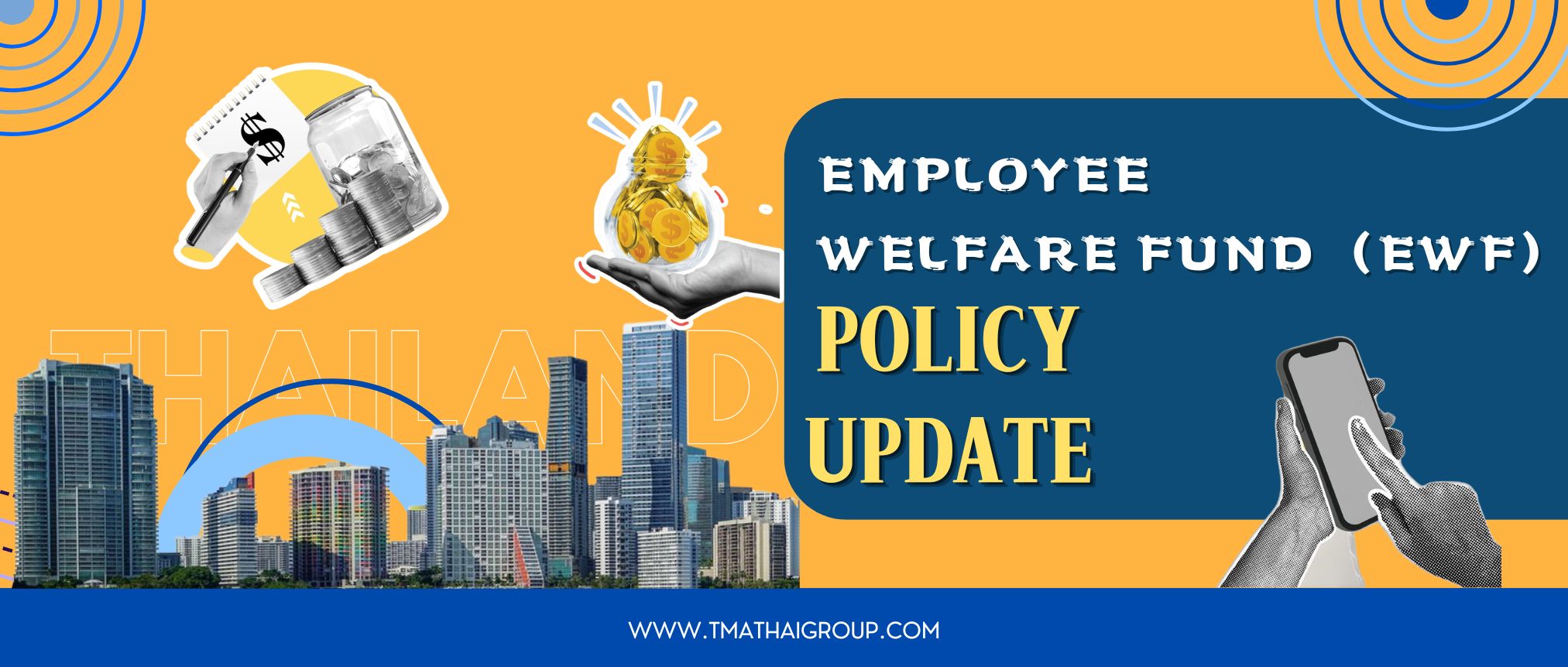
Thailand Businesses: Starting in 2026, Failing to Make This Payment Could Be Illegal!
What Are the Requirements for Hiring Foreign Employees in Thailand?

Two Key Aspects of Thai Labor Law Every Employee Should Know
As the annual audit season returns, how should Thai companies interpret their audit reports?
Transitory Provisions

Chapter 16 Penalty Provisions
Chapter 15 Delivery of Notices
Chapter 14 Labour Inspectors